The 7 Reasons DIY Water Damage Cleanup Backfires in Flora Homes
Here is the ranked list we walk customers through on the phone. Read it before you rent another wet vac.
- You cannot see 60% of the water. Surface water is the easy part.
- Drying time is not optional. Materials must hit specific moisture content readings.
- Mold begins growing in 24 to 48 hours. The clock starts the moment water touches organic material.
- Category matters more than volume. Clean water turns dirty fast.
- Insurance carriers expect documentation. No moisture logs, no full payout.
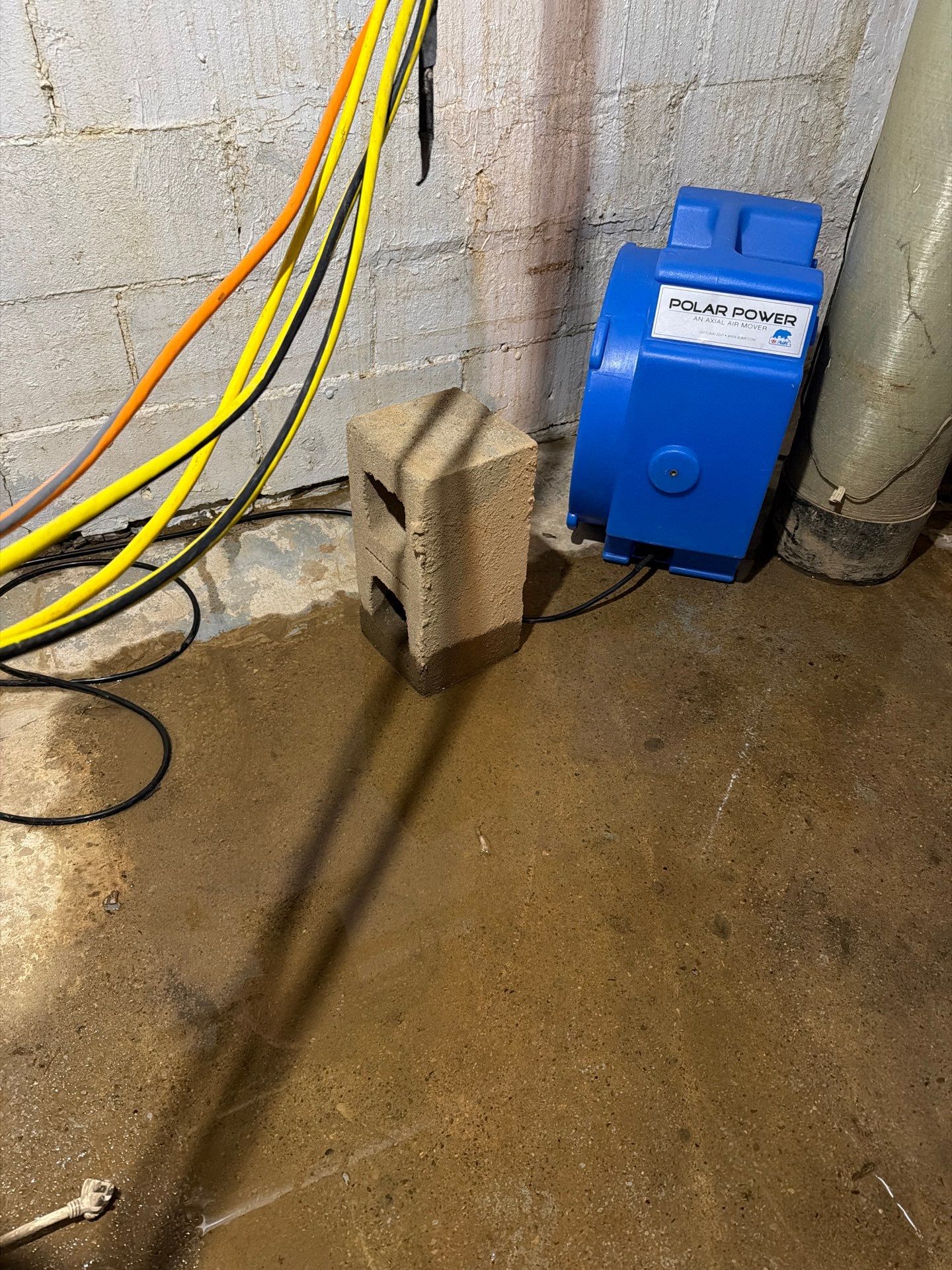
- Rental equipment is undersized. Home store fans move air, not moisture.
- Electrical and structural risks are hidden. One wet outlet can shock you.
Reason 1: The Water You See Is Not the Water That Hurts You
A burst supply line under a Flora kitchen sink can release 100 gallons in an hour. You mop the floor. You feel proud. Meanwhile water has wicked six feet up the drywall, soaked the cabinet kick plate, and run along the joist into the basement ceiling.
Tools we use that you probably do not own:
- Thermal imaging cameras to map cold wet zones inside walls
- Penetrating moisture meters calibrated for wood, drywall, and concrete
- non penetrating scanners that read through finished surfaces
- Hygrometers tracking grains of moisture per pound of air
- Borescopes for cavity inspection without demo
Without these, you are guessing. Guessing in restoration costs thousands.
Common hiding spots we find water in Flora homes:
- Behind kitchen toe kicks where cabinet bases trap pooled water
- Inside wall cavities below window sills and along door jambs
- Under hardwood flooring where planks look fine but the subfloor is saturated
- Above ceilings on the floor below the original leak
- Inside fiberglass insulation that holds water like a sponge
Reason 2: Drying Is Science, Not Just Airflow
Drying is a balance of temperature, humidity, and airflow. The IICRC S500 standard defines this work, and you can read more about what those credentials mean in our breakdown of IICRC water restoration standards.
What a proper dry out looks like:
- Initial moisture mapping of every affected material
- Target dry standard set based on unaffected baseline readings
- Calculation of air mover and dehumidifier load by cubic footage
- Daily readings logged with date, time, and location
- Final clearance only when materials hit target for 24 hours
Box fans from the garage do not produce this outcome. They circulate humid air and feed mold growth.
Reason 3: The 48 Hour Mold Window Is Real
Mold spores are already in your Flora home. They need moisture, organic material, and time. Drywall paper, carpet backing, and wood framing all qualify. Once relative humidity sits above 60% for two days, colonies establish. For the full timeline, see how fast mold grows after water damage.
DIY remediation after mold has set:
- Bleach does not kill mold inside porous materials
- Sanding spreads spores throughout the home
- Painting over staining traps moisture and feeds growth
- HVAC use during cleanup distributes contamination
- Improper containment turns a 50 square foot job into a 500 square foot one
Reason 4: Know Your Water Category Before You Touch It
Three categories. Three very different responses.
- Category 1 (clean water): Broken supply line, tub overflow with no soap, rainwater entering clean. Aggressive drying within 24 hours can sometimes save materials.
- Category 2 (gray water): Dishwasher discharge, washing machine overflow, aquarium leaks. Contains microbes. Carpet pad almost always gets removed.
- Category 3 (black water): Sewage backup, toilet overflow past the trap, storm flooding, river intrusion. Contains pathogens. Most porous materials are unsalvageable.
Category creep is real. Clean water sitting in a Flora crawl space for 48 hours becomes Category 2 by definition. The same water mixed with carpet glue, wall paint, or dust becomes a microbial soup. Time and contact are what shift the category, not the original source.
If you have any sewage involvement, stop reading and call. We handle this through our sewage cleanup service because Category 3 work requires PPE, antimicrobial protocols, and disposal handling that no homeowner should attempt.
Reason 5: Your Insurance Adjuster Wants Documentation
Flora adjusters approve claims based on evidence, not stories. What they expect to see:
- Photos of the source, the affected areas, and the materials removed
- Daily moisture readings showing progression toward dry standard
- Equipment logs with dehumidifier and air mover placement
- Itemized scope of work matching Xactimate line items
- Psychrometric readings demonstrating proper drying conditions
When you DIY, you produce none of this. Claims get denied or reduced. We deliver the full packet to your carrier as part of the job.
Reasons we have seen claims reduced or denied after DIY attempts:
- No proof the loss was addressed within a reasonable window
- Materials thrown out before adjuster inspection
- Mold growth treated as a separate (often excluded) claim
- No moisture logs to justify equipment runtime billing
- Receipts for rented gear that the carrier will not reimburse
Reason 6: Home Store Equipment Will Not Get You There
The dehumidifier you can rent at the big box pulls roughly 50 to 70 pints per day. Our LGR units pull 130 to 150 pints. The math gets ugly fast on a flooded basement. A typical Flora basement loss needs four to six commercial air movers plus two dehumidifiers minimum, running 72 to 120 hours.
Other equipment gaps that derail DIY jobs:
- Standard shop vacs are not rated for sustained water extraction
- truck mounted extractors pull 10 to 20 times more water per pass
- Air scrubbers with HEPA filtration are not available at rental counters
- Heated drying systems shave days off hardwood floor dry times
Reason 7: Hidden Hazards You Will Not See Coming
- Energized outlets and circuits in wet walls
- Sagging ceilings holding 20 pounds of trapped water
- Compromised subfloor structural integrity
- Contaminated insulation that needs full removal
- HVAC ductwork that has wicked moisture through the system
What You Can Safely Do Before Flora Water Restoration Arrives
Our crew dispatches within 2 hours in most cases, so the steps below cover the gap between your call and our arrival.
Some DIY action helps. Here is your safe list:
- Shut off the water at the source or main
- Cut power to the affected area at the breaker if safe to access
- Move electronics, photos, and documents to a dry room
- Lift furniture legs onto foil or blocks
- Photograph everything before moving anything
- Pull up area rugs if you can do so safely
Skip these:
- Do not enter standing water near outlets or appliances
- Do not use household vacuums on water
- Do not lift wet drywall sheets alone (they weigh 80+ pounds wet)
- Do not run the HVAC if ducts may be affected
- Do not throw out damaged items before documenting them
When DIY Actually Makes Sense
We are honest. Some situations are genuinely small enough:
- Under 10 square feet of Category 1 water on hard surface flooring
- Caught within 1 to 2 hours of the leak
- No drywall, baseboard, or cabinet contact
- No subfloor or carpet pad involved
- Source fully stopped
Anything beyond that, get a professional inspection. We offer a free assessment across Flora and the surrounding region.