What exactly counts as black water or Category 3?
Category 3 water is grossly contaminated and can cause serious illness or death if ingested or absorbed through the skin. The IICRC defines it as water containing pathogenic agents, toxigenic substances, or other harmful contaminants. In a typical Flora home, that means sewage backups from a main line clog, toilet overflows that include solids, floodwater from rivers or storm drains, and any water that has been sitting long enough (usually 48 to 72 hours) to grow heavy bacterial loads. Category 1 water from a clean supply line can degrade to Category 3 if it sits in carpet and drywall for a few days in warm weather. We also classify any water that has passed through contaminated building materials, like insulation that previously had rodent activity or a subfloor with old pet damage, as Category 3 regardless of the original source.
Is it safe to clean black water myself?
No, and we say that as people who would rather you call a competitor than get hospitalized. Black water carries E. coli, hepatitis A, rotavirus, and a long list of other pathogens. The cleanup requires full PPE including a respirator with P100 cartridges, chemical-resistant suits, and gloves rated for biohazard work. Porous materials like carpet, pad, drywall, and insulation that have touched Category 3 water cannot be cleaned and reused. They have to be removed and disposed of as regulated waste. A shop vac and bleach will not make the area safe. Bleach actually performs poorly on porous surfaces because it cannot penetrate past the top layer, and it loses effectiveness in the presence of organic matter like sewage solids. For a deeper walkthrough, our guide on sewage backup cleanup and safe removal covers the full protocol we follow on every job.
What does black water cleanup cost in Flora?
Most Category 3 jobs in Central Indiana fall between $3,500 and $10,000, with severe cases involving finished basements or multi-level contamination running $15,000 to $25,000 or more. Cost drivers include square footage, depth of contamination, how many rooms are affected, whether the subfloor or framing needs replacement, and whether HVAC ducts were contaminated. Pricing follows industry-standard Xactimate line items, which is the same software your insurance adjuster uses, so the numbers line up cleanly during claims review. We provide written scopes before work starts whenever the situation allows. Emergency mitigation (extraction, demo, drying, and disinfection) is billed separately from reconstruction, and most policies treat those as two distinct claim phases.
What about belongings, furniture, and keepsakes?
Hard, non-porous items like glass, sealed ceramics, metal, and some hardwood furniture can usually be cleaned and disinfected. Upholstered furniture, mattresses, particle board, and anything porous that absorbed sewage has to be discarded. We photograph and inventory every item we remove so it can be claimed on your policy. Documents, photos, and irreplaceable items go to specialty restoration partners who use ozone, freeze-drying, and ultrasonic cleaning. Tell us early what matters most to you and we will prioritize those items in the first hour on site. Electronics that were splashed but not submerged sometimes survive after professional contact cleaning, though anything with internal contamination is typically a total loss.
How does professional Category 3 cleanup actually work?
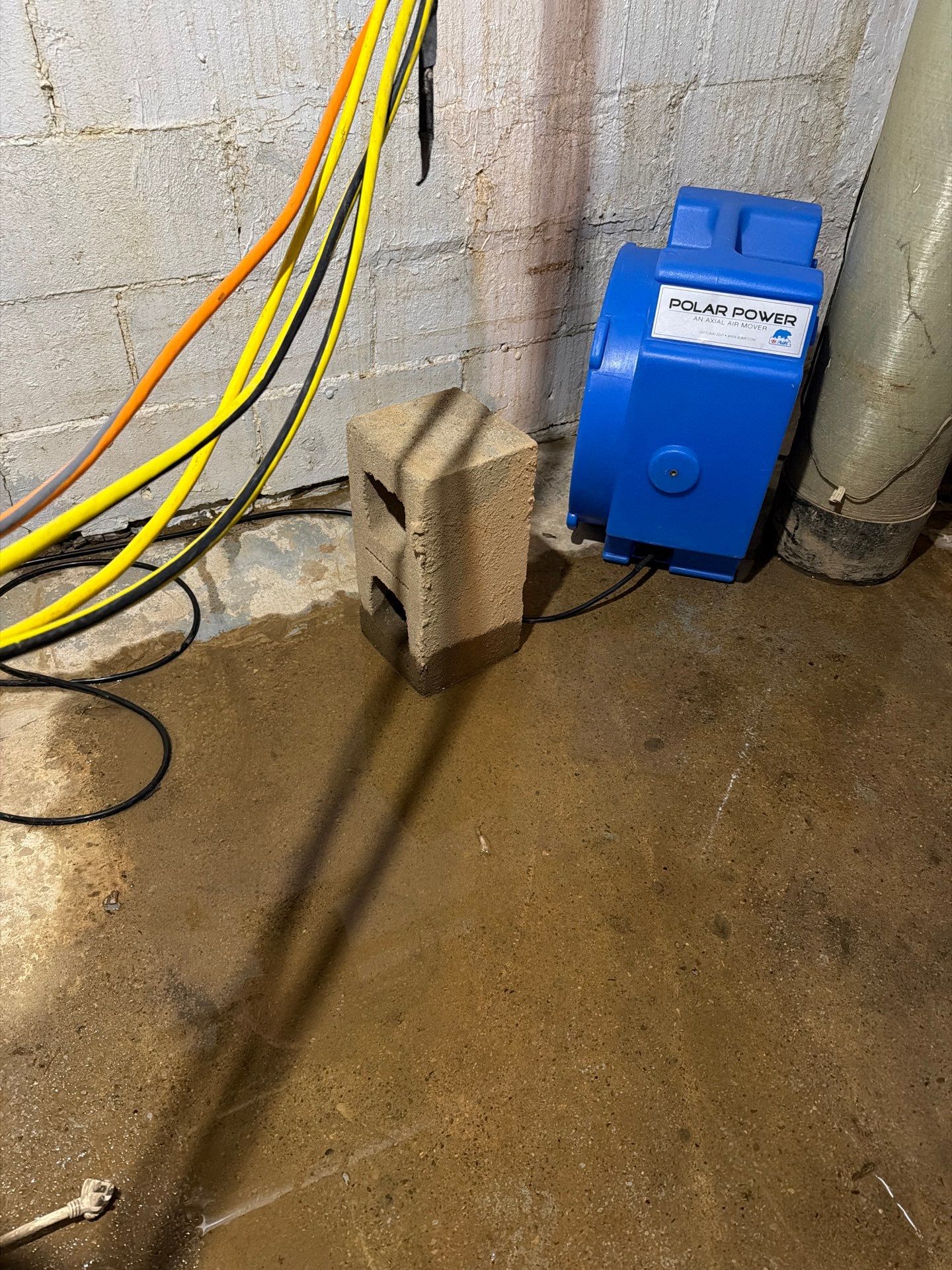
The job runs in a defined sequence. We start with containment, sealing off the affected zone with plastic sheeting and negative air machines fitted with HEPA filtration so contaminants do not spread to clean areas. Then we extract the standing water with truck-mounted or portable units rated for solids. Next comes controlled demolition: carpet, pad, baseboards, and drywall typically two feet above the water line all come out and go into sealed bags. We clean and disinfect all remaining structural surfaces with EPA-registered antimicrobials labeled for sewage. Only then do we set up drying equipment, usually a mix of LGR dehumidifiers and air movers, and we monitor moisture readings daily until the structure hits dry standard. The full process for a moderate Flora basement event usually runs 5 to 8 days. At Flora Water Restoration we also pull a final post-remediation verification with moisture meters and, when warranted, third-party bacterial swab testing before any rebuild begins.
What should you do in the first 30 minutes?
Keep people and pets out of the affected area. Shut off electricity to that part of the house at the breaker if you can do it safely from a dry location. If the source is an interior plumbing failure, close the main water shutoff. Open windows for ventilation if outside temperatures allow, but do not run your HVAC system because it will pull contaminated air into clean parts of the home. Take photos and short videos of everything before anyone touches it, including the water line on walls, affected belongings, and the source if visible. Call your insurance carrier to open a claim, then call a restoration company. In Flora, we typically arrive within 60 to 90 minutes of a confirmed dispatch. If anyone in the home is immunocompromised, pregnant, elderly, or under five years old, relocate them immediately and do not let them back in until clearance testing is complete.
Will homeowners insurance cover sewage backup?
Standard homeowners policies usually exclude sewer and drain backup unless you have a specific endorsement, often called "water backup coverage" or "sump pump and sewer backup." Coverage limits on these endorsements typically range from $5,000 to $25,000, which can fall short on a finished basement loss. Sudden interior plumbing failures, like a burst supply line that becomes contaminated, are usually covered under the main dwelling section. Flood from outside rising water is only covered under separate NFIP flood insurance. We document every loss to claim standards and work directly with adjusters, which speeds approvals significantly. If you also have a finished basement, our resource on flooded basement cleanup costs breaks down what to expect line by line.
How do you prevent mold after the cleanup?
Mold growth on Category 3 jobs is a real risk because the water itself carries spores and organic load. We apply antimicrobial treatments after demolition and again after drying, and we verify moisture content in remaining materials before closing walls back up. If you want more detail on what happens when mold does take hold, our overview of mold after water damage covers removal and prevention in depth. Skipping any step in the Category 3 protocol is how homeowners end up with a second, larger problem six weeks later.
How do you prevent the same backup from happening again?
Once the cleanup is finished, the next conversation is about root cause. If a main line clog caused the backup, we recommend a camera inspection of your lateral to look for tree root intrusion, bellied pipe, or aging clay or Orangeburg sections common in older Flora neighborhoods. A backwater valve installed on the main line is one of the most effective long-term defenses, and many municipalities offer rebates toward installation. Sump pump failures are another frequent cause, so adding a battery backup pump or a water-powered secondary pump is worth the few hundred dollars it costs.